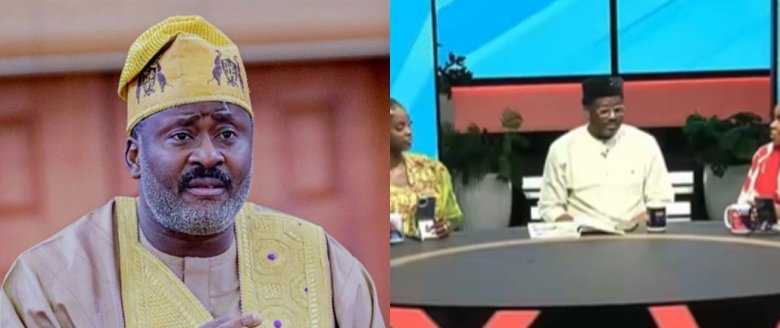
Desmond Elliot, a prominent Nollywood actor and Lagos State lawmaker, has admitted signing the impeachment notice against former Speaker Mudashiru Obasa “by mistake,” claiming he believed the document came from the presidency. The revelation, made during an interview on Channels Television, has sparked widespread backlash across social media, with Nigerians questioning his judgment and the influence of national political figures in state affairs. Elliot stated he was still disoriented after returning from a wedding in South Africa when the impeachment notice was presented to him, leading him to sign it without fully understanding its implications.
The impeachment saga unfolded in January 2025 during a leadership crisis in the Lagos State House of Assembly. Obasa was briefly removed from his position amid allegations of misconduct, but he later returned to office following what sources described as intervention from President Bola Tinubu. Elliot’s admission came after comments by Femi Gbajabiamila, Chief of Staff to the President, who reportedly hinted that Elliot’s political position was nearly affected by the crisis. Elliot reacted with surprise, saying, “It came as a shock,” when he learned of the potential consequences.
His explanation has drawn sharp criticism online, with many Nigerians expressing disbelief that a lawmaker would sign such a significant document based solely on the assumption it originated from the presidency. Social media users questioned the integrity of the democratic process, with @Mujaahid_1 writing, “You are coming on National TV to say you think impeachment of a state’s speaker is from the President? lol. where are you driving to?” Others echoed concerns about political accountability and independence. @bright_iteshi asked, “So because a document is from the Presidency you just sign even though you don’t understand or agree with it. You have no mind of your own???”
The controversy has also reignited debates about the extent of presidential influence in Lagos politics. User @Donniembaeyi remarked, “So this is the politics and democracy, presidency and give directives to impeach someone and you do it with no hesitation.” Another user, @nadoches, added, “When they want to deceive you, they will say there is a GAC that controls Lagos. However, it is obvious that the entire political architecture of Lagos is controlled by Tinubu.” These reactions highlight growing public skepticism about the autonomy of state institutions and the role of national leadership in local governance.
Elliot’s admission underscores the complex dynamics within Nigeria’s political landscape, where personal loyalty, national influence, and local governance often intersect. As the public continues to scrutinize the actions of elected officials, this incident may prompt broader discussions on transparency, accountability, and the separation of powers in Nigerian democracy. The fallout from this event could influence future political decisions and public trust in elected representatives across the country.



Leave a Comment