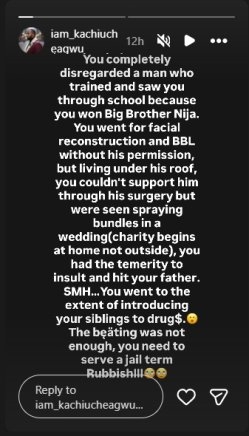
Media personality Kachi has sparked widespread reactions after publicly addressing the domestic controversy involving former Big Brother Naija winner Ilebaye Odiniya, following the circulation of distressing videos showing her allegedly crying out for help over claims of abuse by her father. The incident, which gained traction online over the weekend, has intensified public discourse on domestic violence and family dynamics in Nigeria. Ilebaye’s father later responded with his own account, detailing the strained relationship between them, while Kachi weighed in with a strongly worded social media statement that accused her of ingratitude and disrespect.
In his post, Kachi alleged that Ilebaye had turned her back on her father, a man he said had supported her through school, after she won Big Brother Naija. He criticized her for undergoing cosmetic procedures such as facial reconstruction and BBL without her father’s consent, while simultaneously failing to support him during his own medical surgery. He pointed out the irony of her being seen spending large sums of money at weddings while living under her father’s roof, emphasizing that “charity begins at home, not outside.”
Kachi did not hold back in his condemnation, accusing Ilebaye of verbally and physically abusing her father. He claimed she had the audacity to insult and even hit him, adding that her actions were unacceptable. He also raised concerns about her influence on her younger siblings, alleging that she introduced them to drugs. “The beating was not enough, you need to serve a jail term,” he wrote, calling her behavior “rubbish.”
The controversy has drawn attention from social media users and members of the public, many of whom are now debating the boundaries of family relationships, personal freedom, and the responsibilities of children toward their parents. While some have sided with Kachi, others have expressed sympathy for Ilebaye, highlighting the complexities of domestic abuse cases and the need for empathy and proper legal channels.
The incident underscores the growing visibility of domestic violence in Nigerian households, particularly among public figures. As more stories emerge, the conversation around family conflict, mental health, and societal expectations continues to evolve. The situation remains under public scrutiny, with calls for both parties to seek resolution through dialogue or legal means. This case may prompt further discussions on how Nigerian society handles familial disputes in the age of social media.



Leave a Comment