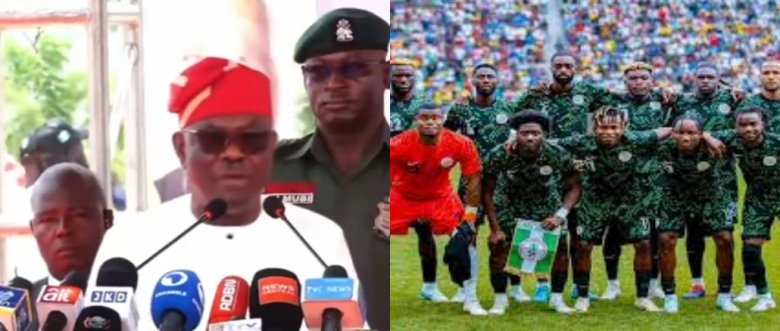
Nigeria’s absence from the 2026 FIFA World Cup has sparked widespread disappointment, with Minister of the Federal Capital Territory, Nyesom Wike, publicly expressing his frustration over the Super Eagles’ failure to qualify. Speaking during a public appearance, Wike revealed he watched the tournament and was stunned to see countries he had never heard of before making it to the global stage while Nigeria remained on the sidelines. He directed his remarks through former Super Eagles captain Joseph Yobo, urging him to convey the nation’s collective dissatisfaction to the current team. “Let me use this medium through you to tell the Super Eagles we are not happy. I watched the World Cup, and countries I had never heard of before qualified to play. Yobo, go and tell them we are not happy,” Wike said.
His comments quickly went viral on social media, igniting a national conversation about the state of Nigerian football. Many Nigerians echoed Wike’s sentiment, blaming years of mismanagement, political interference, and corruption within the football administration for the team’s decline. Critics pointed to the lack of meritocracy in team selection and inadequate support for players and coaches as key factors. Some users highlighted how smaller nations like Rwanda and Comoros managed to qualify, while Nigeria struggled to overcome modest opponents like Benin Republic. The irony of seeing less prominent footballing nations on the world stage while Nigeria missed out resonated deeply with fans.
Social media reactions ranged from serious criticism to dark humor. One user questioned the nation’s preference for politics over talent in football, while another blamed bad leadership and corruption for the current crisis. Others used sarcasm, joking that the Super Eagles should be ashamed for failing to cross borders that smaller teams had conquered. Some pointed out the hypocrisy of fans criticizing the government while remaining silent during player bonuses and allowances. Despite the jokes, the underlying pain was clear: Nigerians are deeply attached to the Super Eagles, and missing a World Cup is a blow to national pride.
The debate also extended beyond football, with some arguing that broader governance failures have weakened Nigeria’s ability to compete internationally in sports. The lack of long-term planning, consistent funding, and youth development programs were frequently cited as root causes. While Wike’s comments were not the first of their kind, they amplified a growing public demand for reform in Nigerian football. As the country looks ahead to future tournaments, the pressure is mounting on football administrators to deliver tangible improvements. The hope remains that the current disappointment will serve as a catalyst for change, ensuring Nigeria returns to the World Cup stage in the near future.


Leave a Comment