
Tunde Perry, a well-known Nigerian media personality, has revealed the moment he lost his admiration for singer May D, despite once being one of his biggest fans. The incident took place during a live performance at the New Afrika Shrine in 2012, when May D was at the height of his music career. Perry, who attended the show, recounted how the singer tossed a gold-coloured chain into the audience during his performance of a popular track with P-Square. He managed to catch the chain and immediately believed he had found a fortune, thinking it was made of real gold.
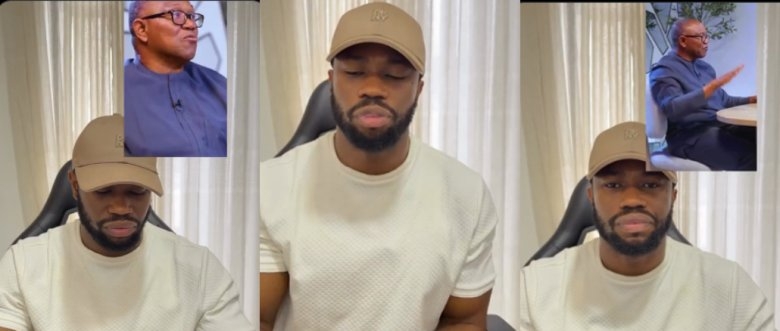
Perry, speaking during a TikTok Live session, shared his experience in Yoruba, saying, “May D used to be one artist I loved so much. The very day I started hating him was when I went to Fela Shrine to watch him perform in 2012. He threw his gold chain into the crowd and I caught it. I knew the struggle I went through, so at that moment, I thought I was rich already.” He described how he guarded the chain all night, too excited to sleep, fearing someone might steal what he believed was a valuable piece of jewelry.
The next day, Perry rushed to an aboki—a local scrap or metal buyer—to sell the chain. However, the aboki told him he couldn’t buy it for even ₦200 because it was made of “condemned iron.” The revelation shattered Perry’s hopes and left him feeling deceived. He said the experience changed his perception of May D, turning his admiration into disappointment.
The story has sparked widespread reactions on social media, with many users finding it humorous and sharing memes about the incident. Others have questioned whether the event truly happened as Perry described, pointing to the lack of concrete evidence. Some fans of May D have defended the singer, suggesting that the chain may have been a prop or costume piece, not meant to be taken seriously.
Despite the mixed responses, Perry’s account has drawn attention to the often-unseen dynamics between artists and their fans. It also highlights how expectations and perceptions can shift dramatically based on a single moment. His story serves as a reminder of how public figures, even beloved ones, can become the subject of personal disappointment when reality doesn’t match expectations.
As Nigerian music continues to evolve, stories like Perry’s offer a glimpse into the human side of fame and fandom. They also underscore the importance of authenticity and transparency in artist-fan relationships. The incident may be from 2012, but its impact still resonates in today’s conversations about celebrity culture and public trust.




Leave a Comment