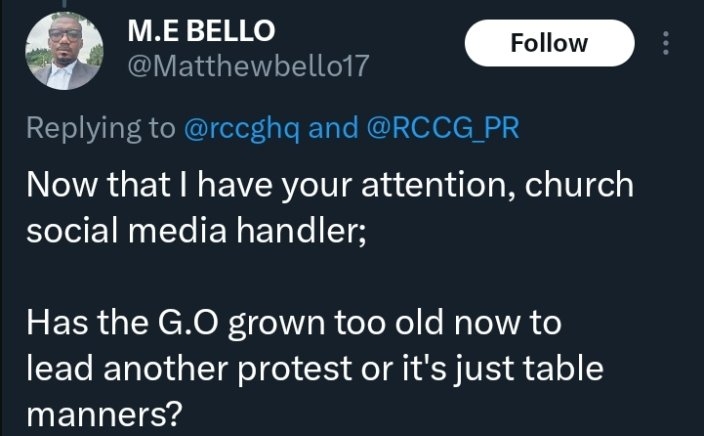
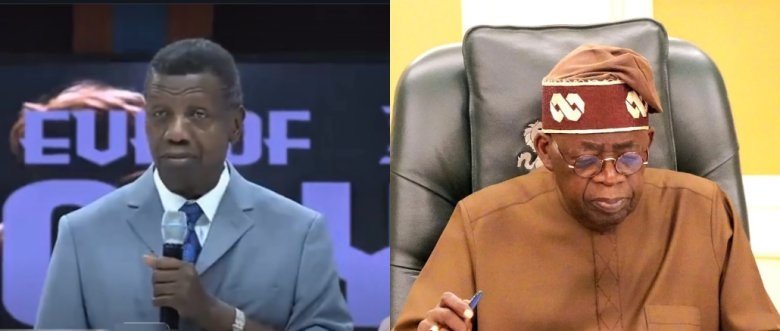
A heated social media exchange between the Redeemed Christian Church of God (RCCG) leadership and user M.E. Bello has ignited widespread debate in Nigeria, centering on the church’s role in national affairs and its perceived silence on current insecurity and economic challenges. The discussion, which gained traction on X (formerly Twitter), highlights growing public scrutiny over religious leaders’ engagement with governance and civic responsibilities. The controversy stems from allegations that RCCG General Overseer, Pastor Enoch Adeboye, was more vocal during the administration of former President Goodluck Jonathan, while his recent public messages have focused primarily on prayer and spiritual matters under President Bola Tinubu’s leadership.
RCCG responded to the criticism by sharing archived video clips on social media, clarifying that Pastor Adeboye never participated in any protest against the Jonathan government. The church emphasized that the widely referenced event was a prayer walk, not a political demonstration, and insisted it took place in Ebute Metta, Lagos, not at the RCCG Redemption Camp as claimed by Bello. This distinction became a key point of contention in the online exchange, with Bello challenging the church’s narrative and questioning the leadership’s current level of civic engagement.
The tension escalated when Bello, in a pointed message, asked the church’s social media handler: “Now that I have your attention, church social media handler; Has the G.O grown too old now to lead another protest or it’s just table manners?” RCCG replied with a sharp retort: “An 84-year-old man should go lead a protest for your own future?….You are not ready.” The exchange quickly drew attention from Nigerians across social media platforms, many of whom weighed in on the appropriateness of religious leaders commenting on national issues.
Bello did not back down, countering that Pastor Adeboye’s public statements may be contributing to voter apathy. He cited the 2023 general elections, when the church leader reportedly said God had not revealed to him that elections would occur, and more recently, claimed that God had already chosen the winner. “Well said then! Kindly, help advise our amiable father-in-the-Lord to stop creating apathy!” Bello wrote. He argued that such statements undermine democratic participation and discourage citizens from engaging in the electoral process.
The debate underscores a broader national conversation about the intersection of religion and politics in Nigeria. While some defend the church’s right to spiritual advocacy, others demand greater involvement from religious leaders in addressing the country’s pressing socio-political challenges. As Nigeria continues to grapple with insecurity, inflation, and governance issues, the public’s expectation for leadership—both spiritual and secular—remains high. The ongoing discourse suggests that the role of religious institutions in national dialogue will remain a topic of intense scrutiny in the months ahead.
Leave a Comment