
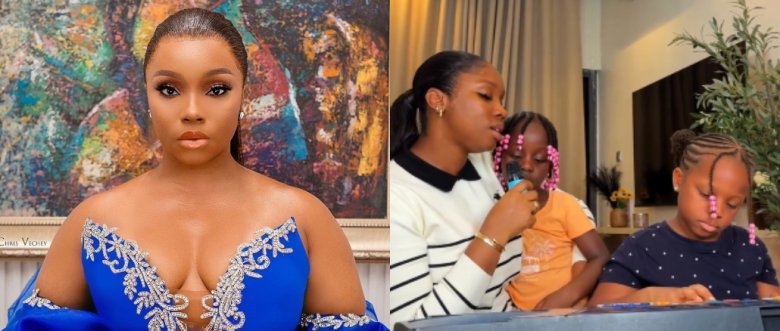
Nancy Isime, a well-known Nollywood actress, model, and media personality, has shared her candid views on parenthood, emphasizing that loving children does not equate to wanting to become a parent. In a recent appearance on the Thanks For Coming podcast, she opened up about her personal stance, sparking conversations about individual choice and societal expectations around childbearing. Her remarks highlight a growing discourse in Nigeria and beyond about redefining family and personal fulfillment beyond traditional norms.
Isime explained that while she genuinely loves children and enjoys their company, that affection does not automatically translate into a desire to have her own. She stressed that loving kids can also mean deeply considering the realities of life today, including the emotional, financial, and social challenges of raising a child. “You know the craziest thing about loving children? I feel like if you really love children, you wouldn’t want to bring them into the world,” she said during the podcast.
She continued, questioning the current state of the world and the struggles people face daily. “Are you not suffering today? Have you not seen me today? Is earth not ghetto? Are you not going through a lot? Don’t you wish some days that you were not born?” These poignant words reflect her concern for the future and the weight of bringing new life into an uncertain world. Her perspective challenges the assumption that affection for children must lead to parenthood.
Isime also pointed out that societal pressure often shapes conversations around motherhood and fatherhood, especially in Nigerian culture where family and children are highly valued. She advocated for personal autonomy, urging people to make decisions about parenthood based on their own values and life circumstances rather than external expectations. “For some people, choosing not to have children may come from a place of care and deep consideration rather than a lack of love,” she added.
Her comments have resonated with many Nigerians, particularly young professionals and creatives navigating modern life. The discussion underscores a broader shift in how people are rethinking family, identity, and purpose. As more individuals speak openly about their choices, there is increasing recognition that not everyone’s path includes children, and that is valid.
Nancy Isime’s openness may encourage more public dialogue on reproductive freedom and personal agency in Nigeria. As society continues to evolve, her voice adds a meaningful dimension to conversations about love, responsibility, and the future of parenthood.




Leave a Comment