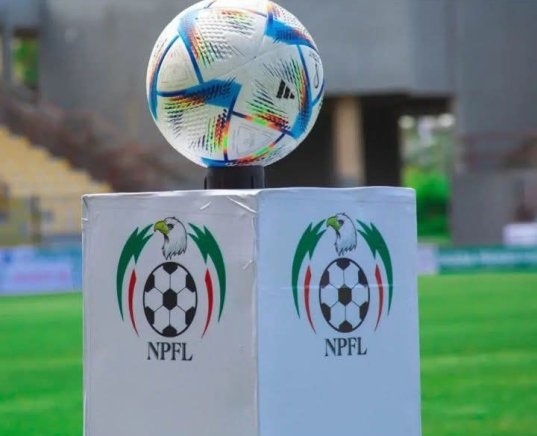
Beginning with the 2026/27 season, the Nigeria Premier Football League (NPFL) will witness a historic surge in prize money, with champions receiving a record N1 billion, runners-up N500 million, and third-placed teams N300 million, marking a major leap in the professionalization of Nigerian football. This announcement was made by Alhaji Shehu Dikko, Executive Chairman of the National Sports Commission (NSC), following a strategic meeting with the Nigeria Football Federation (NFF) in Abuja on Tuesday. The total prize pool for the upcoming season will rise to N2.5 billion, a significant increase from the N200 million awarded to the 2025/26 champions.
Dikko, a former Chairman of the League Management Company (LMC) that evolved into the NPFL, emphasized that the financial boost is part of a broader vision to elevate Nigerian football to continental prominence. He stated that the initiative aims to promote professionalism, attract more sponsorships, and improve overall league standards. All participating clubs will receive graded prize money based on their final league positions, ensuring wider financial benefits across the competition.
Beyond prize money, the NSC has committed to setting a minimum player salary of N2 million in future seasons, although this may not be implemented immediately. Dikko noted that this move aligns with President Bola Ahmed Tinubu’s Renewed Hope and Shared Prosperity agenda, positioning the league as a key pillar of national development. The NSC and NFF also agreed to enforce club licensing regulations more strictly, focusing on infrastructure, youth development, financial management, and corporate governance.
The meeting underscored a firm commitment to ensuring only clubs that meet the six minimum licensing criteria—sporting, infrastructure, personnel, legal, financial, and business development—will be allowed to compete. Dikko stressed that the league’s foundation must be solid, capable of attracting private investment and sustaining long-term growth. The NSC will also support the production of high-quality content to bring the NPFL back to television, with dedicated budget lines for broadcasting and media development.
In another development, stakeholders reached improved contractual terms with Super Eagles head coach Eric Chelle, including increased take-home pay and support for his staff. Chelle and his team will also take charge of the U-23 national team to build a pipeline for future success, including the 2027 AFCON, 2028 Olympics, and 2030 FIFA World Cup. The NSC and NFF are also boosting women’s football, with plans to support the Super Falcons in defending their WAFCON title and establishing a dedicated committee to raise funds for the women’s league. These comprehensive reforms signal a new era for Nigerian football, with a focus on sustainability, inclusivity, and global competitiveness.

Leave a Comment