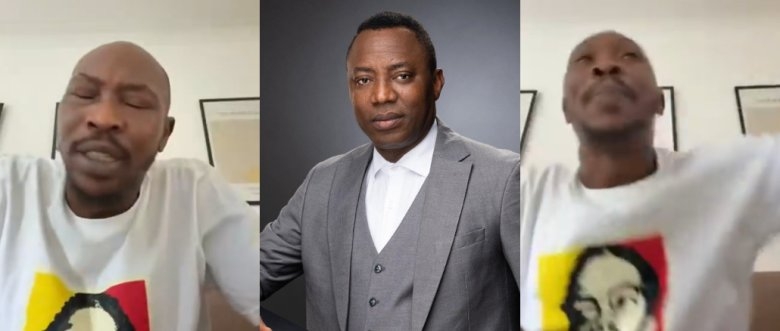
Afrobeat musician Seun Kuti has sparked widespread discussion after publicly backing activist and former presidential candidate Omoyele Sowore, drawing attention to the treatment of dissenters in Nigeria and recalling his own early involvement in pro-democracy campaigns during the military era. In a powerful statement, Kuti described Sowore as a brother, leader, and personal inspiration, while questioning the current government’s approach to activism and free expression. His remarks have reignited debates about political freedom, historical context, and the evolution of dissent in Nigeria.
Kuti’s comments came as Sowore continues to face legal challenges, including charges related to his activism and political activities. The musician emphasized the need for a society that protects voices calling for change, not silences them. He reflected on his childhood experiences, recalling how he and other young people distributed flyers advocating for democracy under military rule. He specifically mentioned receiving these materials from his late uncle, Dr. Beko Ransome-Kuti, and from President Bola Ahmed Tinubu, who was then a prominent figure in the pro-democracy movement.
“In my childhood, when I was 10 years old, my uncle Dr. Beko and President Tinubu used to give us flyers to fight military rule,” Kuti said. “If they had caught us then, would that not have been treason? They would have dealt with me even at my younger age.” His words highlight the contrast between the perceived leniency shown to activists during past military regimes and the current legal actions against figures like Sowore.
The statement has stirred reactions across social media and political circles. Supporters of Kuti and Sowore argue that democratic societies must safeguard dissent, especially when it comes from individuals advocating for transparency and accountability. They see Kuti’s remarks as a reminder that activism should not be criminalized, regardless of the political climate.
On the other hand, critics have questioned the accuracy of Kuti’s account, particularly his claim about receiving flyers from President Tinubu during the military era. Some argue that the political context today is different from the past, and that the legal system must operate within current constitutional frameworks. Nonetheless, the conversation has brought renewed attention to the challenges faced by activists in Nigeria.
Kuti’s voice adds to a growing chorus of artists and public figures speaking out on governance and human rights. As Nigeria continues to navigate complex political dynamics, his words underscore the enduring role of cultural leaders in shaping public discourse. The debate surrounding Sowore’s case and Kuti’s support may influence how future activism is perceived and addressed in the country.



Leave a Comment