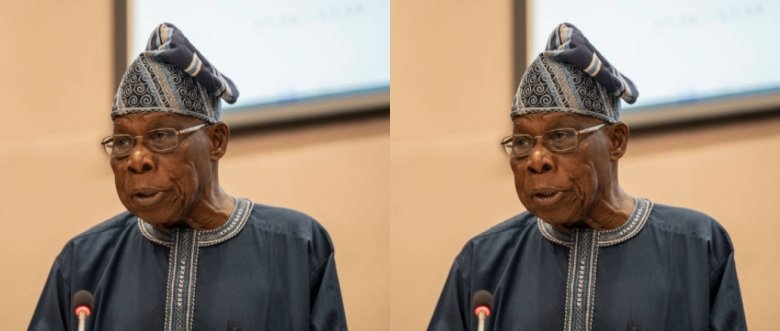
Former President Olusegun Obasanjo has stated that the debate over Sharia law in Nigeria was driven more by political interests than religious concerns, a revelation he made during a recent interview reflecting on the contentious discussions in the Constituent Assembly. The former military Head of State emphasized that while Sharia law became a major point of contention during his tenure, the underlying motivations were often political rather than spiritual. He recalled reaching out to a northern elite figure to better understand the arguments being presented at the time, highlighting his efforts to cut through the rhetoric and grasp the real issues.
Obasanjo explained that he asked the northern leader why people in the region would not use the Sharia Court of Appeal for their legal matters, noting that in practice, many did not rely on the system. The response he received was telling: “Politics… Politics, so what suits people politically?” This exchange, according to Obasanjo, revealed that the push for Sharia law was often shaped by political expediency rather than genuine religious conviction. He stressed that his leadership approach has always been grounded in observing actions rather than listening to promises or political statements.
The Constituent Assembly debates on Sharia law were particularly intense during the early 1990s, a period marked by deep regional and religious divisions in Nigeria. Obasanjo, who served as military Head of State from 1976 to 1979 and again from 1985 to 1993, was deeply involved in navigating these complex issues. His insights offer a rare behind-the-scenes look at how political dynamics influenced national policy decisions, even on matters as sensitive as religious law. He maintained that understanding what people actually do, rather than what they say, is key to assessing the true nature of any political movement.
The former president’s comments come at a time when discussions about religious law and governance continue to shape Nigeria’s political landscape. His remarks underscore the long-standing tension between religious identity and political power in the country. While Sharia law has been implemented in several northern states, its adoption and enforcement have often been tied to electoral strategies and regional power struggles. Obasanjo’s reflections serve as a reminder that behind many public debates, especially those involving religion and governance, lie deeper political calculations.
As Nigeria continues to grapple with issues of federalism, religious pluralism, and regional autonomy, Obasanjo’s perspective adds a valuable historical dimension. His experience as a leader during a critical period in the nation’s history provides context for understanding how political interests can influence even the most sacred of societal debates. The legacy of the Sharia law discussions remains relevant today, as Nigerians seek to balance religious freedom with national unity and democratic governance.



Leave a Comment