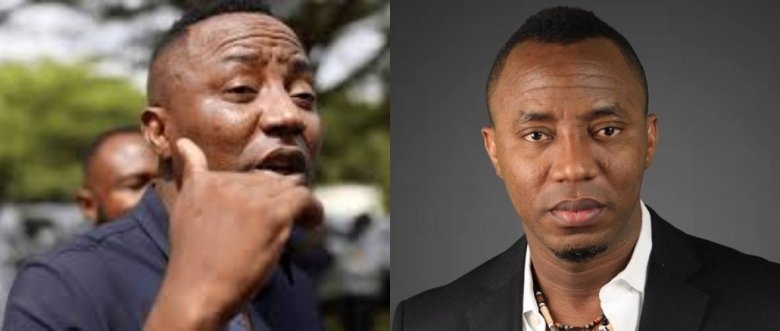
Omoyele Sowore, human rights activist and presidential candidate of the African Action Congress (AAC), has stirred national debate by claiming Nigeria is currently the poorest place on earth to live, directly criticizing the economic policies of President Bola Tinubu’s administration. In a statement shared widely on social media, Sowore accused the government of worsening the plight of ordinary Nigerians by removing fuel subsidies and increasing electricity tariffs without corresponding wage adjustments. He described these actions as a “sledge hammer” on the survival of citizens, highlighting the growing cost of living and widespread economic hardship.
Sowore’s remarks come at a time when Nigerians are grappling with inflation, rising food prices, and unreliable power supply. His statement, which went viral on platforms like Twitter, underscores growing frustration over the government’s economic reforms. While the administration defends these policies as necessary for long-term fiscal stability and energy sector restructuring, critics argue they have disproportionately affected low-income households. Many Nigerians now face daily struggles to afford basic necessities, with some reporting they are surviving “on vibes and grace,” as one social media user put it.
The claim quickly ignited mixed reactions across social media. Some Nigerians agreed with Sowore, citing their personal experiences of increased hardship. Others, however, challenged the assertion, arguing that labeling Nigeria as the “poorest place on earth” is an exaggeration. One user pointed out that Nigeria ranks around 10th poorest globally by GDP per capita, suggesting a more nuanced economic assessment is needed. Still, the sentiment of widespread suffering remains palpable, with many expressing despair over the current state of affairs.
Public discourse continues to center on the impact of subsidy removal, which was implemented in May 2023, and the subsequent rise in electricity tariffs. These policies, while aimed at reducing government expenditure and encouraging private sector investment in energy, have led to immediate inflationary pressures. The National Bureau of Statistics reported inflation rates exceeding 30% in early 2026, further straining household budgets. Critics argue that without adequate social safety nets or wage increases, the burden falls heavily on the poor.
As Nigeria navigates these turbulent economic times, Sowore’s comments reflect a broader discontent among citizens. His words may be seen as inflammatory by some, but they also serve as a mirror to the lived realities of millions. Whether or not Nigeria is the “poorest place on earth,” the consensus is clear: many Nigerians are struggling to survive under the current economic conditions. The government’s next steps will be closely watched as the nation seeks a balance between fiscal discipline and social welfare.




Leave a Comment