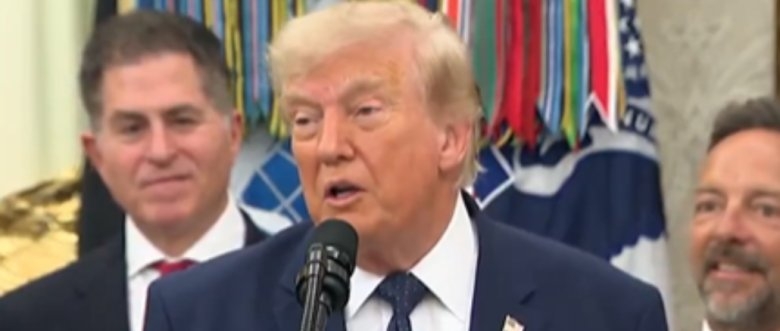
A viral claim circulating online attributes a controversial statement to former U.S. President Donald Trump, asserting that he declared any ceasefire with Iran “over” and stated he no longer wants to engage with Iranian officials. The alleged remarks, which have sparked widespread discussion across social media platforms, have not been independently verified and lack any confirmed official record. Despite the absence of credible sourcing, the claim has gained traction, particularly amid ongoing geopolitical tensions between the United States and Iran.
According to the viral post, Trump reportedly accused Iran’s leadership of dishonesty and dismissed further diplomatic engagement as futile. The exact quote attributed to him reads: “The ceasefire between us and Iran is over. I don’t want to deal with them anymore, they are sc¥m.” This statement has been shared widely on platforms like Twitter and Facebook, often accompanied by commentary on U.S.-Iran relations and global energy markets.
The timing of the claim coincides with heightened scrutiny over Iran’s nuclear programme and the broader diplomatic efforts aimed at preventing military escalation. While the U.S. government has not issued any official statement confirming Trump’s remarks, the narrative has fueled speculation about potential shifts in foreign policy, even though Trump is no longer in office. Many users have expressed skepticism about the authenticity of the quote, noting the lack of credible sources or official transcripts.
Social media reactions have been varied, ranging from satire to serious commentary. Some users questioned the feasibility of a ceasefire in the first place, while others linked the claim to global oil prices, a key concern for Nigerian consumers. One user, @Oge Nwachukwu, humorously asked, “Can fuel price now come down abeg Nigerian marketers?” Another, @Mamioto Oldman Fredrick, offered a more pointed observation: “How do you expect people you killed their supreme leader to just forget everything and move on?”
The incident highlights how misinformation can spread rapidly, especially when tied to high-profile political figures and sensitive international issues. While the claim remains unverified, it has contributed to renewed public discourse on U.S.-Iran relations and their implications for global stability. As tensions persist, fact-checking and official clarifications will be essential to separate truth from speculation. The situation underscores the need for reliable information in an era where digital narratives can shape public perception almost instantly.





Leave a Comment