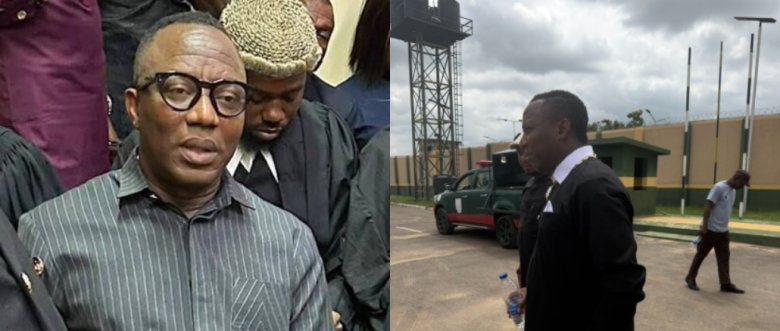
Omoyele Sowore, human rights activist and presidential candidate for the African Action Congress (AAC), has been released on bail after spending time in detention at the Kuje Correctional Centre, following a ruling by the Federal High Court in Abuja. The court granted him bail in the sum of ₦200 million, with conditions including the production of two sureties—one a recognised traditional ruler from his community and the other a person with landed property in Abuja. Sowore must also surrender his international passport to the Deputy Chief Registrar of the court until the case is concluded. The matter has been adjourned to July 6, when the defence is expected to open its case.
Sowore, who was recently freed, expressed strong emotions on social media, condemning what he described as his wrongful detention under the administration of President Bola Ahmed Tinubu. In a post shared on his Twitter account, he wrote: “Leaving Kuje Prison after being unjustly incarcerated by the failed traitor to the Nigerian people, Bola Ahmed Tinubu, and his regime.” He added that prison had not broken his resolve but had instead strengthened his determination to fight for justice. “Prison has never broken the resolve of those who fight for justice. If anything, it only strengthens our determination. The struggle continues. We will never surrender,” he declared.
His time in custody, he said, only deepened his commitment to his political ideals and human rights advocacy. The activist has long been a vocal critic of government policies and has faced legal challenges in the past, including previous arrests and detentions. His latest release comes amid heightened scrutiny of political freedoms and the treatment of dissenting voices in Nigeria. The court’s decision to grant bail, while imposing strict conditions, marks a significant development in his ongoing legal battle.
The prosecution has been directed by the presiding judge to verify the credentials of the sureties before the case proceeds. Sowore was released into the custody of his legal team immediately after the ruling. His supporters and human rights groups have welcomed the decision, viewing it as a step toward upholding the rule of law and protecting civil liberties. Critics of the Tinubu administration have also seized the moment to highlight concerns over the use of legal mechanisms to silence opposition figures.
As Nigeria continues to navigate political and economic challenges, Sowore’s release and his continued activism underscore the persistent tension between state authority and civic engagement. His case remains a focal point in discussions about justice, freedom of expression, and the role of opposition voices in shaping the nation’s future. The upcoming court date on July 6 will be closely watched by legal experts, political observers, and civil society groups alike.


Leave a Comment