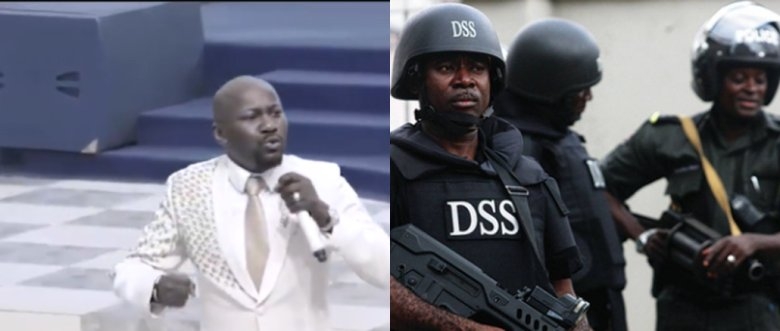
Apostle Johnson Suleman has stirred widespread debate across Nigeria after declaring that the Nigerian Army, Police, and Department of State Services (DSS) are among the best security agencies in the world. The prominent cleric made the statement during a recent public address, citing his international travels as the basis for his assessment. His remarks, which were shared widely on social media, have drawn both support and sharp criticism from Nigerians grappling with persistent insecurity across the country.
Suleman, founder of Omega Fire Ministries, emphasized that his firsthand experiences abroad have convinced him of the professionalism and capability of Nigeria’s security forces. “I have travelled to several countries, and I can boldly tell you that the Nigerian Army, the Police, and the DSS are among the best in the world,” he stated. The quote quickly went viral, prompting reactions from citizens who are increasingly frustrated by rising cases of kidnapping, banditry, and terrorism in various parts of Nigeria.
Social media users expressed mixed emotions about the cleric’s comments. Some questioned the credibility of his claim, especially given the visible gaps in security performance. Twitter user @ChristianA8920 challenged the effectiveness of the DSS, asking why prominent critic Dele Giwa (Gumi) had not been arrested despite ongoing investigations. Others accused Suleman of being politically motivated. @dolapoatanda123 suggested the cleric had been paid to speak positively, warning that his stance might change if his family ever became a target of violence.
However, not all reactions were negative. @too_Extraa acknowledged the potential strength of the security agencies while highlighting internal corruption. “Very correct. But you still can’t undermine the fact that we have bad eggs as top-ranking officials sabotaging the system and making it look bad in the eyes of its own people,” the user wrote. This sentiment reflects a broader public concern that institutional capacity is often undermined by mismanagement and political interference.
Critics like @FrancisFri2863 were more skeptical, calling out religious leaders for what they see as dishonesty. “The people called man of God in this country can lie,” the user commented. Others pointed to Suleman’s own security arrangements as a contrast to the average Nigerian’s experience. @DaddyTwinzz remarked, “Coming from someone who moves around in a bulletproof car,” implying that his perspective may not reflect the reality for most citizens.
@ObiOfala offered a more systemic critique, blaming political leaders for corrupting security institutions. “Politicians have bastardized our institutions and the people in those institutions have allowed themselves to be pawns of government,” he stated. This view underscores a growing public demand for institutional reform and accountability.
As Nigeria continues to battle complex security challenges, the conversation around the effectiveness of its security agencies remains intense. Suleman’s comments have added fuel to the debate, prompting renewed calls for transparency, better leadership, and real reform within the country’s security structures. The future of national safety may depend on whether these institutions can overcome internal weaknesses and regain public trust.


Leave a Comment