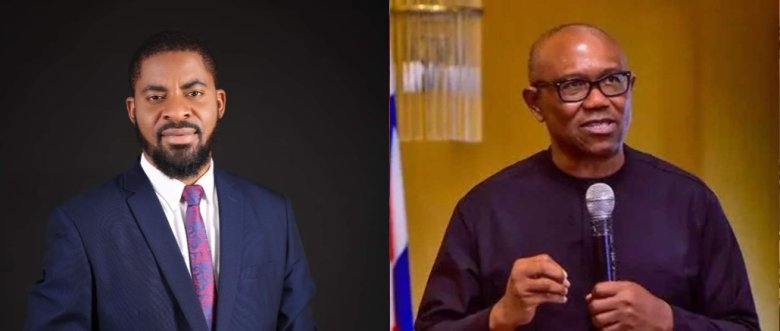
Activist Deji Adeyanju has accused former Anambra State governor Peter Obi of misusing state funds by depositing them into a bank where he had personal interests, a claim he made during a recent appearance on The Honest Bunch podcast alongside Shehu Sani. The allegation centers on Obi’s alleged decision to channel Anambra State money into a Nigerian bank linked to his own financial interests, raising concerns about potential conflicts of interest and misuse of public resources. Adeyanju emphasized that such actions were clearly self-serving, stating that even his seven-year-old son could understand the motive behind the move.
During the podcast discussion, the lawyer argued that instead of using state funds to benefit the people of Anambra, Obi chose to place them in institutions where he stood to personally gain. He stressed that this behavior contradicts the expected standards of public service and accountability. The claim has reignited debates about transparency and governance in Nigerian politics, particularly concerning former governors who have been lauded for their fiscal discipline.
It is important to note that when Peter Obi completed his tenure as governor in March 2014, he publicly announced that he had left office with over ₦75 billion in savings, including cash reserves and investments. This figure was widely reported and became a point of pride for Obi, who often cited it as evidence of responsible financial management during his time in office. However, Adeyanju’s recent allegations challenge the legitimacy of how those funds were managed and invested.
The activist’s comments have sparked renewed scrutiny of Obi’s financial dealings during his governorship, especially regarding the institutions where state funds were deposited. Critics are now questioning whether the banks involved had any direct or indirect ties to Obi or his associates. While Obi has not yet responded to the specific allegations, the claims have gained traction on social media and in political circles.
Meanwhile, the podcast episode has drawn attention for its broader discussion on accountability in public office. Adeyanju’s remarks underscore growing public demand for transparency in how state resources are handled, particularly in a country where corruption remains a persistent challenge. The controversy adds another layer to the ongoing narrative surrounding Peter Obi’s political legacy and his potential presidential ambitions.
As the debate continues, observers are watching closely to see how Obi and his supporters will respond to these serious accusations. The case may influence public perception ahead of future elections and could have implications for how state finances are managed across Nigeria.



Leave a Comment