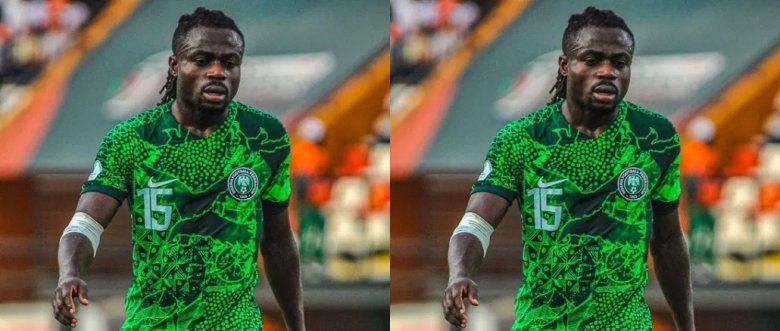
Super Eagles winger Moses Simon has revealed he was denied a professional contract at Enugu Rangers due to tribalism, despite impressing during a three-month trial period. The Nantes forward, who is of Northern Nigerian origin, claims the club’s decision was based on his ethnicity rather than his football abilities. Simon made the disclosure during an interview on Urban Dwells Sports, marking the first time he has publicly spoken about the incident that shaped his early career.
Simon explained that he had spent three months training with the Enugu-based club, consistently performing well and even captaining the team during trials. However, he was ultimately released without a contract. He contrasted his experience with that of another player, an Igbo man, who joined the club just one week before being signed to a professional deal. “I had been there for three months. An Igbo guy came, I’ve forgotten his name. He trained for one week and they signed him to a professional contract. I had been there for months. I was even his captain,” Simon recounted.
The winger said he was later informed that his ethnic background was the reason for the rejection. “They said it was because you are from the North,” he stated, highlighting the discriminatory nature of the decision. Simon described the experience as deeply painful and one he had kept private until now. “I never told anyone this story before, but it’s crazy. That year, I was dropped because I was not Igbo. It wasn’t because of my game; it was just tribalism.”
The incident occurred during the formative years of Simon’s career, a time when he was seeking to establish himself in Nigerian football. Despite the setback, he went on to build a successful career, playing for top clubs in Nigeria and abroad, and earning a place in the Super Eagles national team. His journey from rejection to international recognition underscores his resilience and talent.
Simon’s story has sparked discussions about tribalism in Nigerian football, a topic that remains sensitive and often unaddressed. While many clubs claim to promote meritocracy, cases like Simon’s raise questions about the fairness of recruitment and selection processes. His openness about the experience may encourage others to speak up and push for greater inclusivity in Nigerian sports.
As Simon continues to represent Nigeria on the global stage, his past struggle serves as a reminder of the challenges athletes face beyond the pitch. His story highlights the need for structural change in football institutions to ensure opportunities are based on ability, not ethnicity. The football community now watches to see if his revelations will prompt meaningful reflection and reform.
Leave a Comment