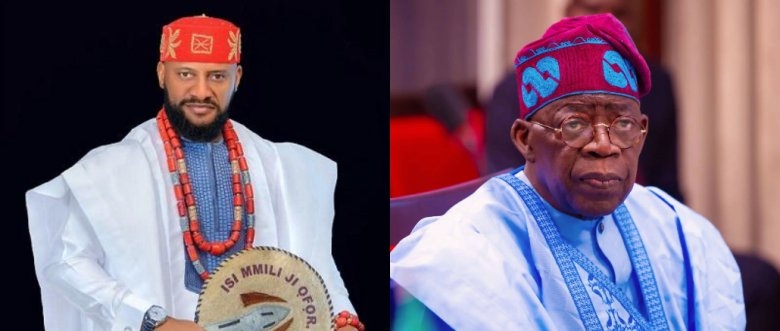
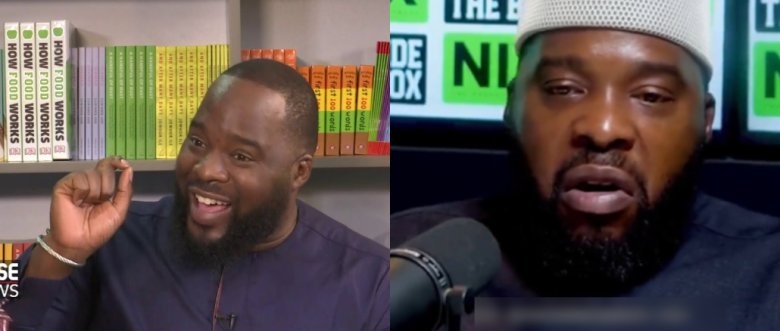
Nollywood actor and politician Yul Edochie has publicly affirmed his support for President Bola Tinubu, stating that his political stance is guided by what he believes to be divine direction. Speaking during an appearance on The Honest Bunch podcast, Edochie emphasized that his decision to back the President is not based on political ideology alone, but on spiritual conviction. He explained that he has consistently felt led by a higher power to stand with Tinubu, a choice he describes as being clearly instructed by God. This revelation has added a spiritual dimension to his public political alignment, which has long been a topic of discussion among fans and critics alike.
Edochie, who is also a prominent figure in the All Progressives Congress (APC), has remained one of the most vocal celebrity supporters of the President. His endorsement has often sparked reactions across social media platforms, with some praising his boldness and others questioning the role of spirituality in political decisions. Despite the polarized responses, Edochie maintains that his personal beliefs are the foundation of his political choices. He insists that while others may be influenced by different factors, his journey is shaped by what he perceives as direct spiritual guidance.
The actor’s comments come at a time when Nigeria’s political landscape is under intense scrutiny, with many citizens seeking clarity on leadership and accountability. Edochie’s unique perspective positions him as a figure who blends entertainment, politics, and faith in a way that resonates with a segment of the population that values spiritual direction in public life. His continued advocacy for Tinubu reflects a broader trend of celebrities using their influence to shape political narratives, often drawing attention to the intersection of religion and governance.
In a separate development, a woman has stirred controversy online after alleging that her boss denied responsibility for her pregnancy, despite reportedly asking her to help him conceive because his wife had been unable to do so for ten years. The woman claimed she agreed to the arrangement after being told of the couple’s long-standing infertility. However, the situation took a dramatic turn when the boss’s wife became pregnant around the same time. She shared her experience on social media, stating, “After I agreed to help my boss to conceive his child because his wife couldn’t conceive for 10 years. Now he has denied my pregnancy because his wife got pregnant the same time.” The post has since gone viral, prompting widespread debate about consent, ethics, and legal rights in such sensitive situations.
As public discourse continues to evolve on both political and social issues, figures like Yul Edochie and individuals sharing personal stories online highlight the complex dynamics shaping Nigeria’s public conversation. The coming months will likely see further scrutiny of how faith, fame, and personal narratives influence national dialogue.


Leave a Comment