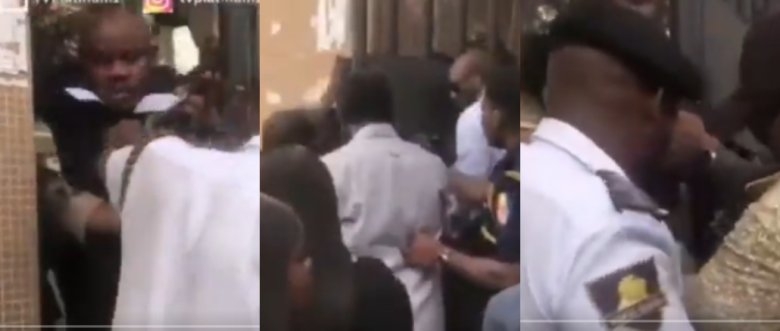
Activist Omoyele Sowore and a group of supporters sparked controversy at the Federal High Court on Friday, May 18, 2026, as they protested alleged restrictions on media and public access during the bail hearing of Justice Crack. The incident unfolded when security personnel reportedly blocked journalists and citizens from entering the courtroom, prompting Sowore to confront officials on the premises. He was heard declaring, “You have no right to prevent the media from entering the court,” a statement that quickly went viral on social media platforms.
Videos circulating online showed Sowore and others attempting to gain entry while security operatives tried to maintain order. The protest drew immediate attention, with Nigerians reacting in diverse ways across social media. Some praised the activist’s stance on transparency and the public’s right to observe judicial proceedings, while others criticized the disruption as unnecessary and counterproductive to court operations.
The situation reportedly had real consequences, as one social media user, @anasuachara, revealed that a case had been adjourned because a witness was among those denied entry. This raised concerns about how such restrictions could interfere with the administration of justice. Another user, @CUdeachara, emphasized that only the judge should have the authority to restrict media access, not security officers, highlighting the importance of judicial autonomy.
Meanwhile, @larrizy expressed concern that frequent protests and crowding around court premises could hinder public access to legal proceedings. “At times people just want to sit down in courts and listen to cases so they can learn. Now with these unnecessary protests in court premises, it would be difficult,” the user wrote. This sentiment echoed among those who believe in balancing transparency with order.
On the other hand, supporters of Sowore argued that public courts must remain open to all. @lokky_xy stated, “Public courts should be open to the public and media. No one should block journalists or citizens from observing proceedings.” @LyfAcrosBorders added, “You can manage security without blocking access to a public case. There has to be order, not chaos.”
The incident has reignited national conversations about court transparency, media freedom, and the role of public oversight in Nigeria’s justice system. As the legal process for Justice Crack’s bail continues, the debate over access to judicial proceedings is likely to remain a focal point in discussions on democracy and accountability.





Leave a Comment