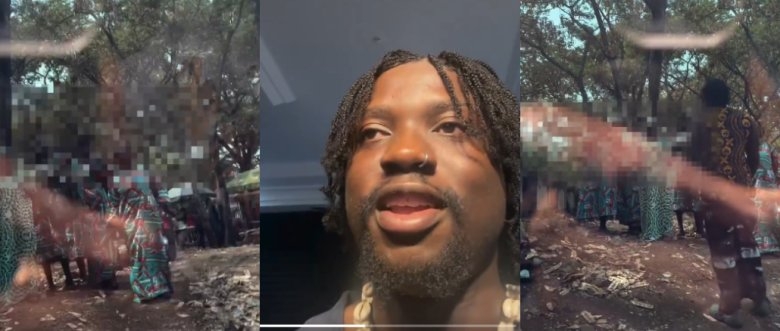
Controversial Nigerian social media activist VeryDarkMan has ignited widespread online debate after alleging that women mobilized for All Progressives Congress (APC) campaign activities in Abuja were left stranded without transport fare to return home. In a viral video shared across social media platforms, he claimed to have encountered the women wearing APC campaign wrappers, questioning their genuine support for President Bola Tinubu’s administration. He accused the party of exploiting them for political gain, only to abandon them afterward, raising concerns about the promised empowerment for women under the APC government.
VeryDarkMan’s video, which quickly gained traction, features him stating, “I met these APC women. I knew there was no way these women were putting on APC wrapper because they love Tinubu and APC. Now they are stranded in Abuja because they don’t have transportation fare to go back home after you have used them for campaign… Where is the empowerment you promised them?” His words struck a nerve, prompting reactions from Nigerians across various social media channels.
Many users echoed his concerns, criticizing the APC for what they see as empty promises and poor treatment of grassroots supporters. One X user, @Dr_EM_platform, commented, “Nothing good comes from APC.. if you support APC to defend yourself most times go just dey shame you.” Another user, @REALMATTERS, added, “The more we learn to be realistic and make people accountable for their actions the less work we have to a New possible Nigeria.” These responses reflect growing public skepticism toward political parties’ claims of inclusivity and empowerment.
However, not all reactions were supportive. Some users questioned VeryDarkMan’s involvement, suggesting he should not have interfered. @Buddyvic1 wrote, “This shouldn’t be his problem, if they like they should be stranded in the bush. They got what they are looking for.” Others, like @MariaHarris984, expressed concern over whether he offered help, asking, “I hope he didn’t help them?” This division highlights the polarized nature of public discourse on political engagement and social responsibility in Nigeria.
The incident has drawn attention to broader issues of political mobilization, worker rights, and gender equity in Nigeria’s electoral processes. While the APC has not officially responded to the allegations, the viral nature of the video underscores the power of social media in shaping public opinion and holding political actors accountable. As Nigeria continues to navigate its democratic journey, moments like this serve as reminders of the need for transparency, fairness, and genuine inclusion in political campaigns. The debate sparked by VeryDarkMan’s video may well influence how future campaigns are organized and perceived by the public.



Leave a Comment