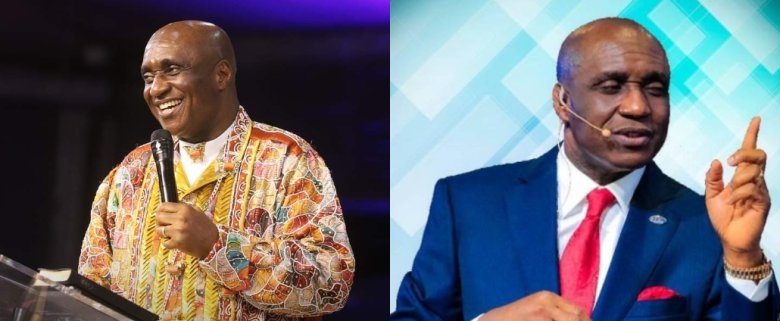
Pastor David Ibiyeomie has defended Nigerian clergy against accusations of silence on the country’s current socio-political and economic challenges, asserting that many pastors have consistently spoken out in the past but were met with criticism and indifference. Speaking during a recent sermon, Ibiyeomie questioned why some Nigerians are now demanding that religious leaders voice their opinions when they previously failed to support those who criticized government policies under former President Goodluck Jonathan. He emphasized that the church has not been silent, pointing to figures like Pastor Oyedepo as examples of clerics who raised concerns but were labeled as “talking too much.”
“Nigeria is a funny country,” Ibiyeomie stated. “All those who used to speak out during Jonathan’s administration, why are they not talking now? They say men of God are no longer speaking about the current situation in the country. When we were shouting, did you people speak up? We have been speaking out for a long time.” His remarks, shared widely on social media, sparked a wave of reactions from Nigerians across different platforms. Some agreed with his perspective, arguing that religious leaders have a moral duty to speak against injustice, while others criticized him for what they saw as deflection or hypocrisy.
On Twitter, user @damiano4peace wrote, “I always tell people that politics and religion are interwoven. A man of God who doesn’t criticize bad leaders is not a man of God but a fraud, a criminal, a wolf in sheep’s clothing.” Another user, @Pappii052, responded with sarcasm: “This man Dey phor he for use him chest tag ADEBOYE why he Dey beat around?” Others accused him of inconsistency, with @BenedictOr19587 noting, “So u stopped speaking because no one listened initially. But u never stop speaking about tithe lol.” The debate extended beyond theology into public accountability, with @1KevSKg adding, “Nigerians na una turn o. No savior is coming.”
Some users dismissed Ibiyeomie’s comments as performative, with @de_dave__ calling him and others “fake money makers” who are funded by “mumu” — a Nigerian slang term for unscrupulous or corrupt sources. @Acedouglas01 expressed frustration, saying, “Make him shut up abeg, which kain gaslighting be this??? Say na when we were shouting.” The hashtag #PastorIbiyeomie and related discussions trended on social media, reflecting deep public interest in the role of religion in national affairs.
As Nigeria continues to grapple with insecurity, inflation, and governance issues, the conversation around religious leaders’ responsibilities remains unresolved. Ibiyeomie’s remarks highlight a growing tension between spiritual leadership and civic engagement, raising questions about who should speak, when, and with what consequences. The debate is likely to persist as Nigerians seek clarity on the intersection of faith, morality, and public accountability.

Leave a Comment