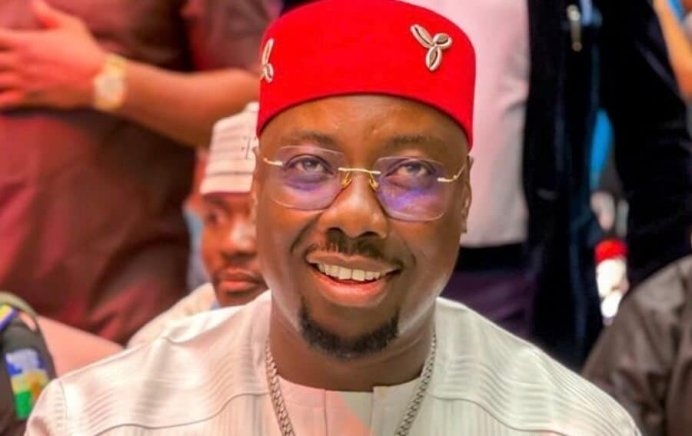
Nigerian businessman Obi Cubana has expressed his views on the ongoing legal and detention situation of Nnamdi Kanu, urging the government to handle the case with fairness and due process rather than through coercion. Speaking during a recent interview with BBC Igbo, Cubana emphasized that justice must be served through proper legal channels, not pressure or force. He stressed that the matter requires patience and a step-by-step approach, and expressed confidence that Kanu will eventually be released. “On the case of Nnamdi Kanu, I have said it earlier that the government needs to treat him the same way they treat others. But it’s not something that will be done by force; it is a step-by-step process. This time around, soon, Mazi Nnamdi Kanu will be free,” he stated.
Kanu, the leader of the Indigenous People of Biafra (IPOB), was first arrested in 2015 by Nigerian authorities on charges of terrorism, treason, and operating an unlawful organization. He was granted bail in 2017 but fled the country following a military operation in his hometown of Umuahia, Abia State. His absence from the country lasted several years until 2021, when he was arrested abroad and repatriated to Nigeria in a move that sparked widespread legal and public controversy. The government accused him of inciting violence through his broadcasts and activities linked to IPOB, leading to a prolonged legal battle.
In 2022, an appeal court discharged Kanu, raising serious questions about the legality of his return to Nigeria. However, the federal government appealed the decision, leading to renewed charges and continued legal proceedings. The trial, which has drawn national attention, particularly in the South-East, became a flashpoint for protests and sit-at-home orders by his supporters demanding his release. The case has remained a sensitive issue, touching on themes of national unity, freedom of expression, and the rule of law.
In November 2025, a Federal High Court in Abuja delivered a verdict finding Kanu guilty on multiple terrorism-related charges. The court ruled that his words and actions contributed significantly to violence and unrest in the region. As a result, he was sentenced to life imprisonment. The judgment has reignited debates across Nigeria, with some viewing it as a necessary step for national security, while others see it as a violation of civil liberties.
Cubana’s comments come at a time when public discourse around Kanu’s case remains intense. His call for fairness and legal consistency reflects broader concerns about justice and equity in Nigeria’s legal system. As the legal process continues, many eyes remain on how the government will proceed and whether the case will set a precedent for future political and legal challenges in the country.



Leave a Comment