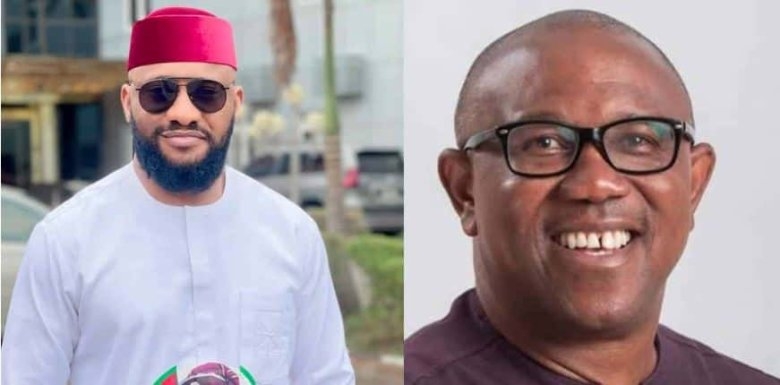
Nollywood actor Yul Edochie has made a bold claim about former presidential candidate Peter Obi, asserting that Obi’s lack of political success since leaving the All Progressives Congress Grand Alliance (APGA) is tied to a spiritual oath he took before departing the party. In a post shared on his 𝕏 handle, Edochie stated that Obi swore before Ojukwu and the people of Anambra State that he would never leave APGA, and that if he did, he would not achieve anything politically. The actor believes this oath continues to hinder Obi’s political ambitions, despite his widespread popularity and strong performance in the 2023 presidential election.
Edochie emphasized that oaths, especially those made with religious or cultural significance, carry immense power in Nigerian society. He argued that Obi’s decision to leave APGA broke a sacred promise, and as a result, his political journey has been stalled. According to the actor, this is evident in the 2023 elections, where Obi’s name was used to win races in some areas, yet he himself lost the presidential race. Edochie expressed surprise that Obi has not yet recognized the spiritual implications of his actions, suggesting that the former governor’s current political activities with the ADC are futile.
The actor further predicted that Obi could still become president in 2031, after President Bola Tinubu’s tenure, but only if he returns to APGA. He stressed that Obi’s political future is inextricably linked to the party he once swore to remain with for life. Edochie’s comments have sparked reactions across social media, with many Nigerians debating the role of spirituality in politics and whether such oaths truly influence political outcomes.
While the claim is rooted in cultural and spiritual beliefs, it reflects a broader narrative in Nigerian politics where religion, tradition, and personal vows often play significant roles in public discourse. Edochie’s remarks come at a time when political alliances are shifting, and many are watching how figures like Obi navigate their next steps. His statement also highlights the enduring influence of APGA in the South East, a region where the party remains a dominant political force.
As Nigeria continues to grapple with political realignments and the search for new leadership, Yul Edochie’s words add a unique dimension to the conversation. Whether or not one believes in the power of oaths, the discussion underscores the deep cultural fabric that shapes Nigerian politics. The future of Peter Obi’s political career may yet depend on how he responds to such claims and whether he chooses to re-engage with APGA or forge a new path.


Leave a Comment