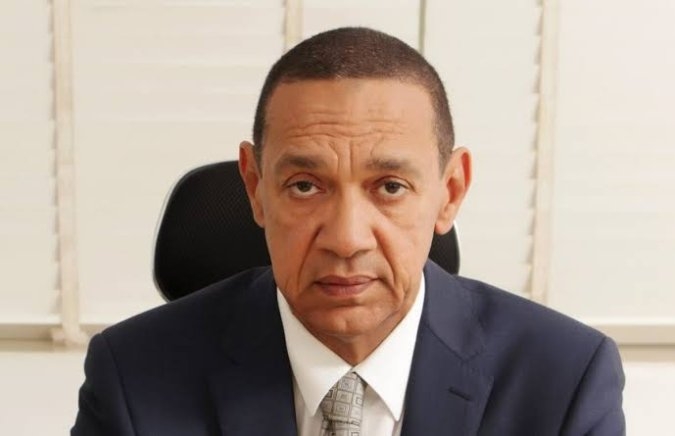
Senator Ben Murray-Bruce, founder of the Silverbird Group, has revealed how the 1983 military coup that overthrew President Shehu Shagari’s government led to the collapse of his nascent concert promotion business in Nigeria. Speaking during the Infrastructure Dialogue 2026 in Abuja on Wednesday, Murray-Bruce detailed how the political upheaval disrupted his operations and ultimately ended his foray into the entertainment industry. He explained that the coup not only paralyzed communication networks but also created an environment of economic instability that made concert promotion unsustainable.
Murray-Bruce started his concert promotion business in 1980 with a ₦20,000 loan from his siblings, building a growing enterprise over the next three years. At the time, Nigeria’s entertainment sector was in its infancy, with minimal infrastructure, limited media platforms, and little institutional backing for cultural ventures. The industry operated with few venues and restricted promotional channels, making it difficult to reach audiences. Despite these challenges, Murray-Bruce managed to organize around 20 concerts and lost money on only one, showcasing his business acumen even in a nascent market.
The turning point came in 1983 when the military seized power. Murray-Bruce recalled that the first action after the coup was cutting off phone lines, which crippled his ability to coordinate events. “Once Shagari was overthrown, all hell broke loose. In those days, when a coup d’état occurred, the first thing they did was to cut off your phone. That was how they ruined my concert business,” he said. The sudden disruption halted all operations, and the subsequent instability worsened economic conditions.
Foreign exchange shortages and rising costs made it harder to import equipment and sustain production. Ticket prices, which had started at ₦5 to ₦10, rose to ₦15 to ₦20 by 1983, but audience turnout dropped by 25 per cent. “My ticket rates when I started were ₦5 to ₦10. In 1983, my last show was ₦15 to ₦20, and I lost 25 per cent of my audience. That was how my concert promotion died,” he noted. With only one television station (NTA), one radio station (FRCN), and a few newspapers for promotion, reaching audiences became increasingly difficult.
Moreover, the lack of modern entertainment venues beyond the National Theatre in Lagos further constrained growth. Despite these setbacks, Murray-Bruce’s early experience laid the foundation for his later success in media and entertainment. His story highlights the vulnerability of private enterprise during political instability and underscores the importance of infrastructure and policy support for Nigeria’s creative economy. As the country continues to develop its entertainment sector, lessons from the past remain relevant for future growth.

Leave a Comment