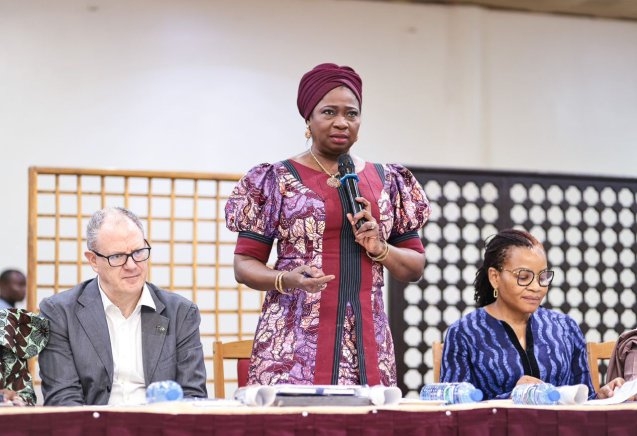
The Nigerians in Diaspora Commission (NIDCOM) has partnered with the International Organization for Migration (IOM) to review and strengthen Nigeria’s National Diaspora Policy 2021, aiming to enhance engagement with Nigerians living abroad. The collaboration, which took place during a high-level meeting in Abuja, brought together key stakeholders including members of the Standing Committee on Diaspora Matters, representatives from the National Assembly, civil society organizations, and state diaspora officers. The session focused on evaluating progress, identifying gaps, and outlining actionable steps to improve policy implementation and deepen diaspora involvement in national development.
Chairman of NIDCOM, Abike Dabiri-Erewa, emphasized the need to shift from discussions to tangible outcomes, describing Nigerians in the diaspora as vital partners in the country’s growth. She highlighted that their contributions extend beyond remittances to include investment, innovation, and global influence. Dabiri-Erewa acknowledged funding challenges but reaffirmed NIDCOM’s commitment to coordinating diaspora initiatives nationwide. She called for stronger legal frameworks to support diaspora engagement, including voting rights, the establishment of a Diaspora Investment Trust Fund, and improved funding mechanisms.
She commended states like Lagos, Abia, and Cross River for setting up dedicated diaspora structures and urged others to emulate their efforts. Dabiri-Erewa also outlined ongoing initiatives such as the Diaspora Data Portal, the annual National Diaspora Day celebrated on July 25, and the upcoming Nigeria Diaspora Economic Conference in Canada. These efforts, she said, are designed to strengthen connections and unlock the full potential of the diaspora.
Sharon Dimanche, Chief of Mission for IOM in Nigeria, represented by Ukamaka Anyanechi, stressed that Nigerians abroad remain one of the country’s most underutilized assets. She noted their significant contributions to sectors like healthcare, information and communication technology, education, business, and the creative industry. Through the EU-backed migration programme, IOM is supporting NIDCOM in policy review, data system enhancement, and diaspora mapping to improve coordination and impact.
Ron Hendrix, representative of the EU Delegation to Nigeria and ECOWAS, described the diaspora as a critical bridge between Nigeria and the global community. He underscored their role in skills transfer, investment, and promoting Nigeria’s image internationally. The Senate Committee on Diaspora and NGOs, led by Aniekan Bassey and represented by Abubakar Adam, reiterated its support for diaspora engagement and raised concerns about the safety and welfare of Nigerians in countries like South Africa.
The House Committee on Diaspora, chaired by Tochukwu Okere and represented by Ademola Adewale Taofeek, noted that remittances from Nigerians abroad exceed foreign direct investment, yet more must be done to harness their knowledge and global networks. Catherine Imaji Udida of the National Commission for Refugees, Migrants and Internally Displaced Persons called for inclusive policies that address the realities of all Nigerians abroad, including those in irregular or short-term migration situations. She advocated for regular stakeholder meetings to improve coordination.
State diaspora officers such as Annie N. Onu, Jermaine Sanwo-Olu, and Margaret U. Indeed shared updates on local-level initiatives, while civil society groups contributed recommendations for policy improvement. The meeting concluded with a shared commitment to deepen collaboration and ensure the National Diaspora Policy 2021 becomes a catalyst for sustainable development. As Nigeria continues to build stronger ties with its global citizens, the diaspora’s role in shaping the nation’s future is set to grow significantly.

Leave a Comment